
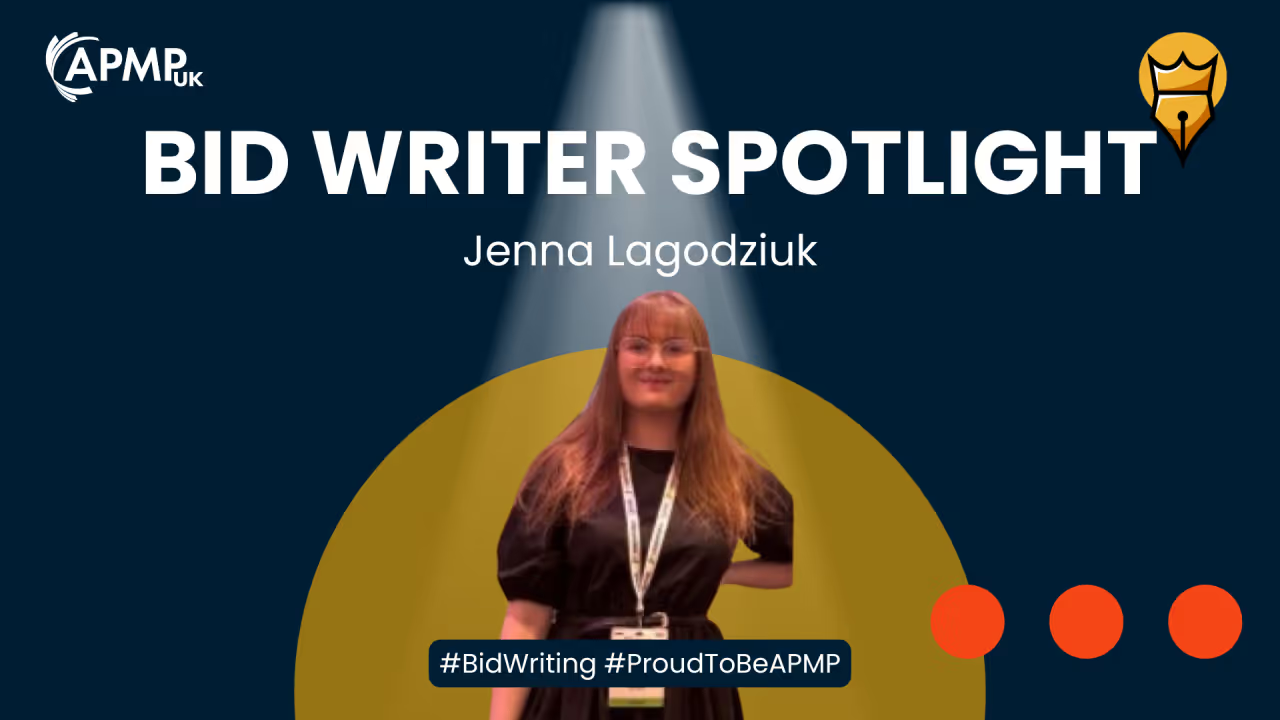
Bid Writer Spotlight: Jenna Lagodziuk, BB7
Introduction
Meet the experts elevating the craft of bid writing. Our Bid Writer Spotlight series profiles members of the Focus Group, sharing the personal stories and professional insights of the people dedicated to the art of the win. Discover the passion, the skills, and the faces behind the UK’s most successful proposals.
Career foundations
I came into bid writing straight out of university, having studied English Language. Before that, I spent time teaching English in Spain, working with students of all ages. That experience forced me to learn how to verbally communicate clearly, quickly and without fluff, and this is a skill that I still use every day.
Teaching really built my confidence. Standing in front of a class of 30 people, many older than me, taught me how to hold my own, explain ideas simply and adapt my approach depending on who I was speaking to. Developing empathy skills like this has really stood me in good stead. I came back to the UK to complete my degree, which strengthened my written English skills including understanding how language works, structuring meaning for impact, and learning how to how to write with purpose.
Those two strands, spoken communication under pressure and disciplined writing are a very strong foundation for bid work.
Your route into bid writing and progression to date
Bid writing was a deliberate choice for me, not ‘something I fell into’, like many people in the industry. I was at University during COVID and at the time I lived with a family friend who wrote grant bids. I was exposed to the bidding process early and realised I enjoyed using my writing skills in a practical, outcome-focused way, without having to become a teacher or a journalist.
After university, I joined a land remediation company as a bid coordinator, which also gave me exposure to asbestos removal and passive fire protection. That role connected me to the fire engineering industry, where I am now.
Your role today
I moved to BB7 around three years ago to help build the bid function from scratch. I joined as a bid coordinator and progressed to bid manager, taking responsibility for shaping the approach, the process and the way the business bids. Since then, I’ve helped support significant growth, including exceeding revenue targets well ahead of plan.[LT1] [GU2]
I’m the bid manager for all service lines at BB7, covering fire engineering and façades. I support nine regional offices across the UK and Ireland, working under both UK procurement legislation and Republic of Ireland processes.
My role is a blend of management and writing. I qualify opportunities, manage capacity, coordinate SMEs, plan and run interviews, and take responsibility for the structure and quality of submissions. I also write, review and refine content myself.
When I joined BB7 there was no formal bid process. One of my early contributions was introducing a bid qualification matrix, so decisions about what to pursue are evidence-based rather than reactive. This has now become our standard approach, so I can see how my contributions improve business processes.
Alongside bids, I’m involved in wider activities such as social value and ESG initiatives, which helps connect bid work to the wider business.
Skills that matter most at your level
Communication is the single most important skill in my role, not just written communication, but verbal communication with very different people. Engineers, directors and senior leaders all need information in different ways, and I adapt my approach deliberately.
Emotional intelligence plays a big part. I use insights-style personality training at BB7, which has helped me understand both my own preferences and how others work. I’m a strong “red”, direct and action-focused, but I’ve learned to flex depending on who I’m dealing with and even which communication channel they prefer.
Organisation is critical. I manage not only my own time, but the time and input of SMEs, legal teams and commercial colleagues. Booking diaries early, setting expectations clearly and planning ahead protects everyone’s time.
Judgment matters too. I’m not an engineer and I don’t pretend to be. Knowing when to lean on technical experts and when to say “I don’t know, but I’ll find out” is essential. Writing bids is the ‘easiest’ part of my role, it’s the part that I find most restful, but only if I have been organised enough to have done research and spoken to SMEs far enough in advance.
In your bid life
My days aren’t identical, but they are planned. I start around 8am, working through emails and actions. I check in with my team when they arrive and then work to a structured plan I’ve already set.
I plan my week well in advance, usually on a Thursday or Friday the week prior, blocking out time for each tender and estimating how many hours it will take. I deliberately leave some space for ad-hoc work and non-tender activities.
Mornings are generally for meetings and collaboration. Afternoons are protected for bid work, reviewing SME input, drafting responses or reviewing work from my team. I block large chunks of time, sometimes half a day, to focus on one tender properly. Writing needs that space and dedicated time.
I always take a proper lunch break, and I usually finish around 6pm. The structure is what makes the workload manageable, particularly because of my dual role of bid writer and manager.
Motivation
The variety in bids keeps me engaged. On one bid, I could work on content covering health and safety, quality, methodology, finance, team structures and technical delivery. I’ve gotten to learn and absorb a huge amount of technical knowledge simply by doing the job.
I also genuinely enjoy writing. Once I’ve gathered the right information, the writing phase feels calm and focused, almost therapeutic. It’s where everything comes together.
Bid writing feels like the right place for me. It’s fast-paced, practical and people-focused. That combination suits how I think and work.
Challenges and pressure
Capacity is a constant challenge. With a small team and multiple tenders live at once, I have to be very clear about what is realistic. Transparency is key to this. I’m open with senior management about capacity limits and what support is needed.
Organisation is my main way of managing pressure. I book SME time early, send documents to legal as soon as they arrive, and plan backwards from deadlines.
Being organised for other people is how I stay organised myself.
Time pressure from clients is another reality of working in bods. Short deadlines are common and require discipline, prioritisation and, sometimes, tough conversations internally.
How the bid writing role is changing
AI is the biggest change I’ve seen how rapidly it’s grown in just four years. When I started, we didn’t use AI at all. Now it’s everywhere, from tools like Grammarly through to generative AI.
I’m concerned that AI can make some people underestimate the value of bid writers. I’ve already seen engineers try to bypass conversations by generating answers themselves. The problem is that those answers don’t score well. They don’t respond to the marking criteria, the client context or the nuances of the question. The role of the bid writer as a translator, strategist and quality controller is becoming more important, and not less.
AI and bid writing in practice
AI is used in the business, but selectively. Basic tools are standard, and generative AI is sometimes used as a starting point. However, I don’t treat AI output as finished content.
My concern is not AI itself, but how it’s used. Without SME insight and bid judgment, AI answers miss what clients are actually asking for. I manage this by explaining the impact on quality scores and showing how client requirements are not being met if we use ‘raw AI’, and reiterate that AI can’t replace the years of experience and education the engineers (SME’s) I work with possess.
This is an area that will continue to evolve and would benefit from further reflection as practices mature.
Looking ahead
I want to develop my skills in bid graphics and visual communication, particularly the graphics that sit within responses, not just front covers. I’m already exploring this through APMP activity and tools like Canva.
I’m APMP Foundation qualified and plan to work towards Practitioner by the end of 2026. I’ve also found real value in the APMP mentoring programme, particularly in building confidence as a manager and in pushing back constructively.
Longer term, I want to make an impact within the profession. I don’t see myself leaving bid writing. I want to grow within it and help shape how it’s viewed.
Advice for aspiring and developing bid writers
My core advice is simple: always clarify, never assume.
Use the clarification period. Ask questions, even if they feel obvious. Assumptions lead to poor pricing, weak responses or missed requirements. You only get one chance to win a tender.
Believe in yourself and take opportunities, even if others think you’re making a mistake. Nobody is born a bid writer. If something doesn’t work, it isn’t necessarily a failure, it’s information.
And don’t underestimate the importance of verbal communication. Writing matters, but great bids come from great conversations.
Life beyond bids
Outside work, I switch off deliberately. I practise yoga, meditate, walk and read. When I’m not working, I’m properly off, which helps me stay focused when I am on.
Spotlight Snapshot
- Your bidding superpower Organisation
- One myth about bid writing you’d love to break That bid writing isn’t creative, it is, just not in the traditional sense
- A skill every bid writer needs to develop Verbal communication
- A tool, habit or technique you couldn’t work without Blocking time in my calendar
- One book, podcast or resource that’s shaped your thinking Surrounded by Idiots by Thomas Erikson
- Three words colleagues would use to describe you Direct, organised, outgoing
- Favourite way to switch off Yoga
- Coffee order Decaf iced latte with oat milk
- Snapshot gaps None identified from the interview.